


It is an undeniable fact of life that the quality of our thoughts, our work and our contribution to humanity is directly related to the quality of the input.
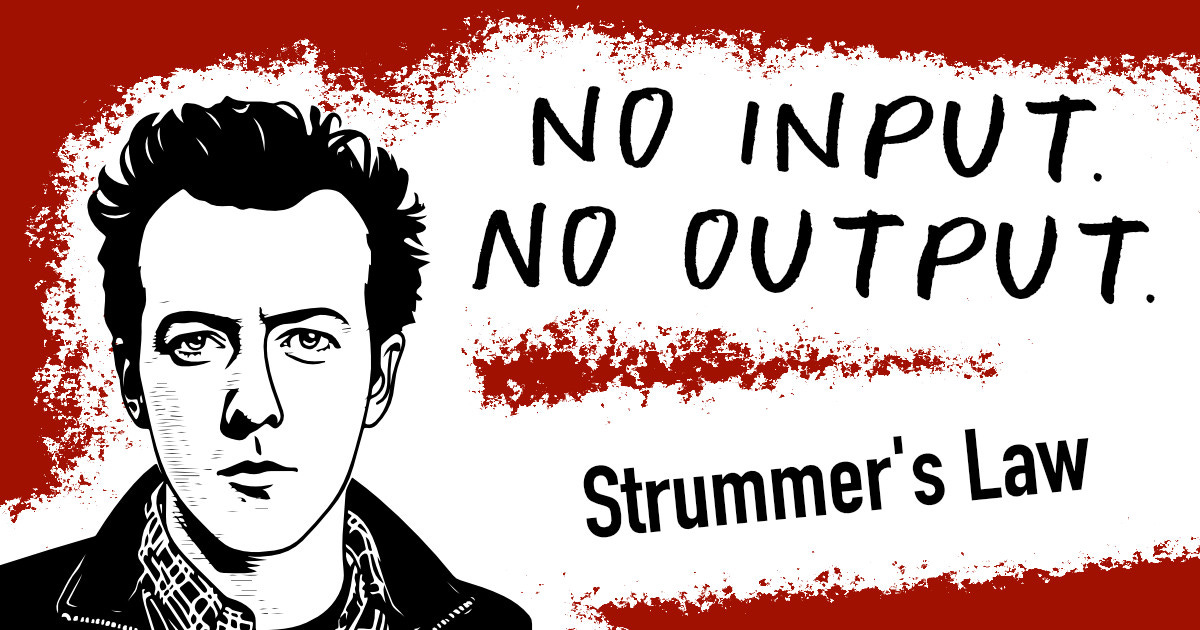
Whatever we feed the beast will inevitably come out in what we produce (and even dictate whether we produce anything at all).
As someone who has spent years getting under the skin of the creative process, I know that mastering it begins with curiosity, and this muscle can be trained. This involves developing the conscious ability to open up your mind at will, zoom out and set your antenna to “receive.”
Interesting things start to happen when we learn how to skillfully manoeuvre the lens of our mind’s eye from expansive immersion to focused immersion. It separates the confident creator from the amateur collector.
But when our senses are constantly being bombarded with nonstop, superficial white noise, we need to acknowledge that much of the content thrust upon us simply won’t provide the nutrition our imagination needs.
You know this.
So, what’s the antidote?
You’ve got to find a new kind of seasoning
Expansive Immersion
I regularly make a point of arranging interesting things in my diary to jolt me out of the daily doldrums and expand my inner horizons; looking at weird stuff in specimen jars with my kids, spending an afternoon thumbing through handmade Zines, or enjoying a colourful evening of Leigh Bowery-inspired cabaret.
It doesn’t matter what kind of “creative” you are – artist, scientist, designer, writer, entrepreneur, engineer. It is essential to season your main course with unexpected flavours from time to time.
You might already dip in and out of interesting content – publications, exhibitions, shows, books and films – and this is all good stuff. Keep doing it. Do more of it!
But the sweet also calls for the sour.
If you are pretty gen’d up on your specialist subject, then I would suggest you occasionally dive into things diametrically opposite to what you know best.
Do you operate in an industry that depends heavily on conversations – marketing or PR, maybe? What can you learn about a Buddhist vow of silence (or, even better, participating in a silence retreat)?
Do you normally paint landscapes or make floral paper collages? Then go visit a kinetic theatre or read about near-future technologies in Wired Magazine.
“T-shaped people”
Over 15 years ago, I discovered an enduring concept in Tim Brown’s book Change by Design. He called it “T-shaped people”.
T-shaped people are “architects who have studied psychology, artists with MBAs, or engineers with marketing experience”.
This idea of the multidimensional creative has stayed with me ever since. Brown taught me that the really exciting stuff happens at the intersection of the ‘T’.
So, if you are not one already, work toward becoming more T-shaped.
Immerse yourself in the unexpected. Look for clues where you would normally never dare to tread. Fill sketchbooks, snap pictures and collect all kinds of random stuff. Set out to greedily fill your notebooks with any idea or concept that looks remotely interesting, ready to be distilled when the time comes.
After all, inspiration really can come from anywhere.
Focused Immersion
Going for a wander in a delightful location or flicking through books all afternoon is already my idea of heaven. But consider, for a moment, what happens when we do the very same thing with a project bubbling away in our minds.
This moves the dial from ‘browse’ to ‘discover.’
All of a sudden, the whole immersion process cranks up to 11. My brain is on fire; clues appear from every angle, patterns emerge, and ideas trickle (then gush) forth.
Filling your cup is an essential part of the creative process. However, considering that we retain only 30% of what we see, 20% of what we hear, and only 10% of what we read after two weeks, having something to attach our newfound knowledge to is essential for new roots to bed in.
This is why I am a big fan of Focused Immersion.
So how do I practice “Focused Immersion”?
First, you must define what you want your subconscious mind to work on. It will become your best ally.
Legendary inventor and futurist Ray Kurzweil says you should never go to bed without asking your subconscious a question, and credits his greatest inventions as a result of this practice. So if dreaming is the ultimate form of immersion, how can we transfer this wisdom into the waking world?
Before setting out on an immersion field trip, take some time to consider what you will be working on in the coming days, weeks, or months, and set your subconscious a brief. Plant a few seeds.
I am always in and out of my notes, reflecting on what’s on the boil. This regular check-in with my creative brain keeps the receiving signal strong.
[Don’t have anything interesting to work on right now? Check out my article on defining your next big project.]
A couple of guardrails
Immersion is joyful. But immersion can also be addictive. Always discovering, always learning. Infinite possibilities abound.
Author Neil Gaiman knows this only too well. He strongly advises writers, when world-building for a new story, to get in and get back out as quickly as possible. You are walking a fine line between the joy of discovery and getting dragged in headfirst.
If you have a project bubbling, set yourself a TIME LIMIT for the immersion stage and stick to it, especially if you are guilty of spending too much time meandering. You need to develop the discipline to know when you have enough raw material.
Then, when you’re done, it’s time for your subconscious mind to do its thing while you take in the scenery.
Advertising legend James Webb Young called this phase “Incubation” – something great thinkers have used for aeons. You know what I’m talking about – those great ideas that come to you in the shower, or standing in the queue at the coffee shop.
“Incubating” is a great tool to use after a spell of immersion. Go for a walk. Don’t look at what you’ve collected for a few days. Let the swirling morass drain. Your subconscious brain will do the rest.
Some ideas will certainly come to you while you are immersing yourself, but I often find the real goodies show up a little while later. This could be when you next sit down to work on your project, or they could show up at your Nan’s house. The beautiful thing about filling your cup is that ideas start to float in the ether, so you’d better be ready to grab them before they move on to someone else.
Now, do the work.
Immersion is undoubtedly one of the most enjoyable parts of the creative process.
Go down bizarre rabbit holes just for fun. Keep asking “What if?” Ask questions about everything. Challenge your assumptions at every turn. Fire up all your senses and look at things from other perspectives. Imagine yourself in someone else’s shoes.
If you’re not accustomed to doing these things, make a note to do so, and these muscles will develop over time.
Expansive immersion (without any necessary destination) and focused immersion (usually with a project in mind) both have some pretty heavy lifting to do in the creative process, so it’s important to understand the distinctive roles they play.
Pick which one you’d like to roll with this week – expansive or focused – then go forth and discover, you amazing, creative being.
If this article has inspired you, I’d love to hear about the projects you are working on in the comments below.
Until next time.
Stay curious,
Sharon
Sign up for The Mixtape - brainfood for creatives and curious minds - and you will receive a link to my FREE 5 Day Creative Reboot in your Substack welcome email.
📌 PS - If you found this post helpful, would you consider restacking it and sharing it with your audience?
This spreads the word and keeps me writing content that will help you unlock fresh ideas and turn them into something real. 🙏
Thanks for reading The Mixtape!
This post is public, so feel free to share it.
If you are ready to immerse yourself in your next big project, then join me inside the Perfect Project Masterclass
If you are…
A bored creative or curious mind seeking inspiration and something new to work on.
Tired of starting projects but NEVER finishing them.
Struggling to get clear on how to direct your creative energies.
Someone with a burning desire to create something from nothing, but with no idea where to start.
I will show you how to turn your daydreams and scribbles into your next BIG Project.
I will walk you through:
Why most projects never get out of the blocks, and how to fix this
How to cut through the fog and decide where to direct your creative energies
How to set up your project so it opens the gates to a tidal wave of creativity
The 7 Steps you need to take to craft your own unique “Perfect Project”
And leave you with the Perfect Project Blueprint that will set you up for success time and time again.
If you’re ready to define a crystal clear vision for your next big project that could change everything, click the button and join me inside the masterclass:
Choose creativity when the world makes it so easy not to.
What project are you dying to get off the ground, but haven’t yet? Drop me a line in the comments and let’s talk about how to get it out of the blocks. 💡
I'm out walking the dog and just in case I get hit by a bus I wanted to say I loved this!